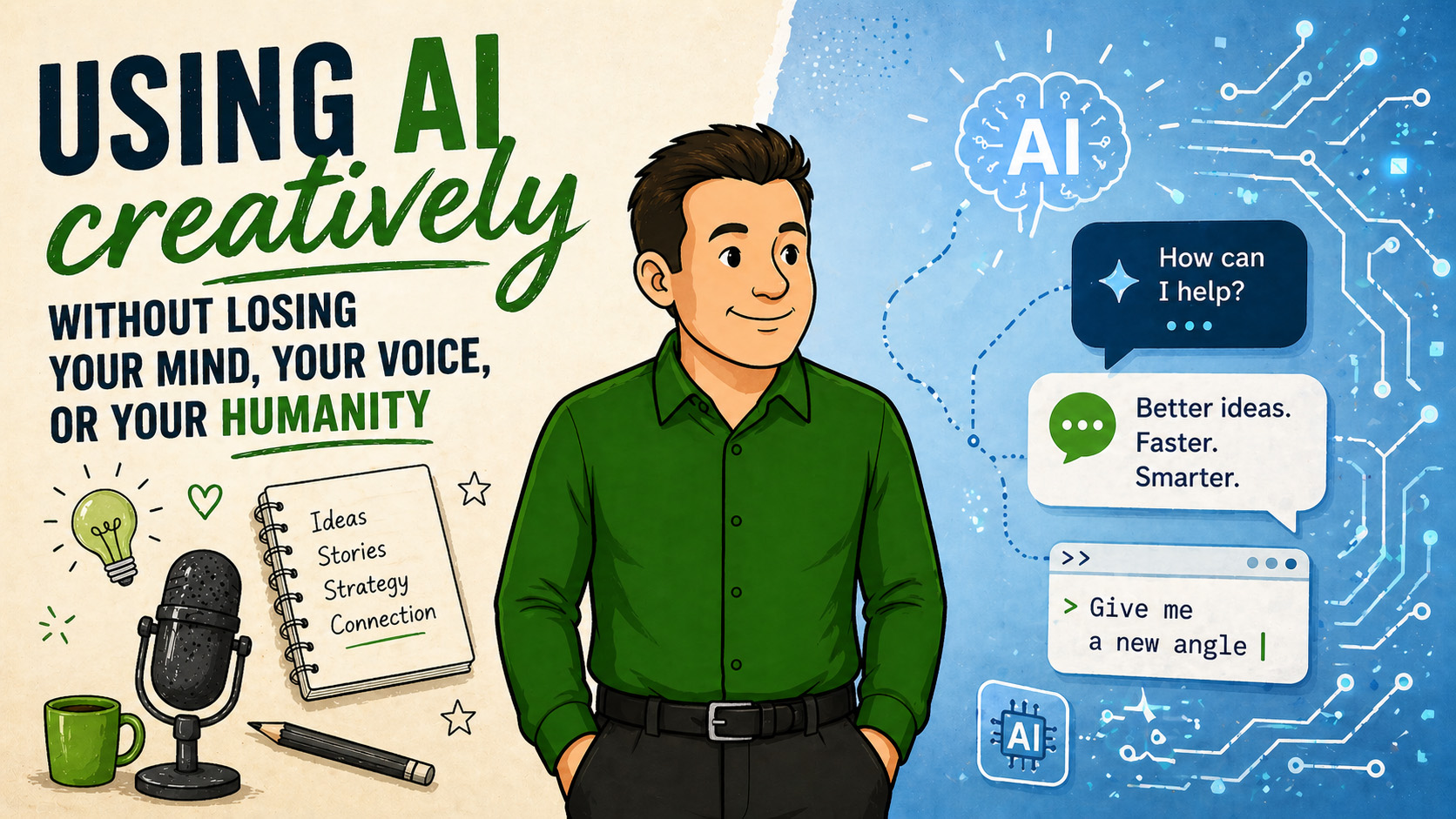
LAND AN DELIVER – EPISODE 011
Using AI is not the real problem. The challenge is how to use it without losing your judgement, your voice or your sense of what good actually looks like.
For anyone working in marketing, comms or content, this feels familiar. AI can help you move faster. It can get you off the blank page. It can suggest ideas, structure your thinking, create drafts, edit images and explain things that would otherwise take hours to work out. But speed is not the same as quality.
The risk is not that AI is useless. It is that it looks useful too quickly. A response can be polished, fluent and grammatically correct, while still missing the message, the nuance or the human judgement that makes the work worth sharing. That is where “prompt and paste” becomes dangerous. It feels productive, but it can quietly strip away the thinking that gives content its value.
This is where a more human approach to AI matters. Not treating it as magic. Not treating it as a threat. And not treating it like an all-knowing expert. Instead, using it like a clever but inexperienced assistant. Brief it properly. Give it context. Ask it to interview you. Use it to explore options, challenge assumptions and remove some of the grunt work. But keep yourself firmly in the loop.
Get that right, and AI becomes less about replacing creativity and more about supporting it. It can help you think more clearly, work more confidently and spend more time on the parts of your work where your judgement matters most.
In this episode of Land and Deliver, Darren Wingham talks to Kim Mason from Nailed AI about how businesses, marketers and creative people can use AI without losing their minds, their voice or their humanity.
They explore the excitement, fear and confusion surrounding AI, especially for SMEs and non-technical teams who know they need to engage with it but are not sure where to start. Kim explains why AI adoption should not be treated as a simple IT rollout, and why curiosity, language, experimentation and critical thinking are some of the most important skills you can bring to it.
Drawing on real-world examples, they unpack what “AI slop” really means, why polished output still needs human checking, and how to avoid producing content that sounds impressive but says very little. They also look at how AI can be used as a thinking partner, from overcoming blank page syndrome to creating better briefs, developing tone of voice, sense checking ideas and preparing for professional advice.
The conversation also covers hallucinations, outdated information, fact checking, source verification, shadow AI, business security and the importance of giving teams clear guidance on safe and responsible use.
If you have ever wondered whether you should fear AI, ignore it or start using it more seriously, this episode offers a grounded, practical and reassuring place to begin.
Share This Story, Choose Your Platform!

HEAR THE WHOLE SERIES ON YOUR FAVOURITE PODCAST PLAYER



About Darren & Louise
Louise’s work

Our blog is packed with articles and stories based around lifestyle, business, design and wellbeing. Subscribe now to get all of our updated directly to your inbox every week.